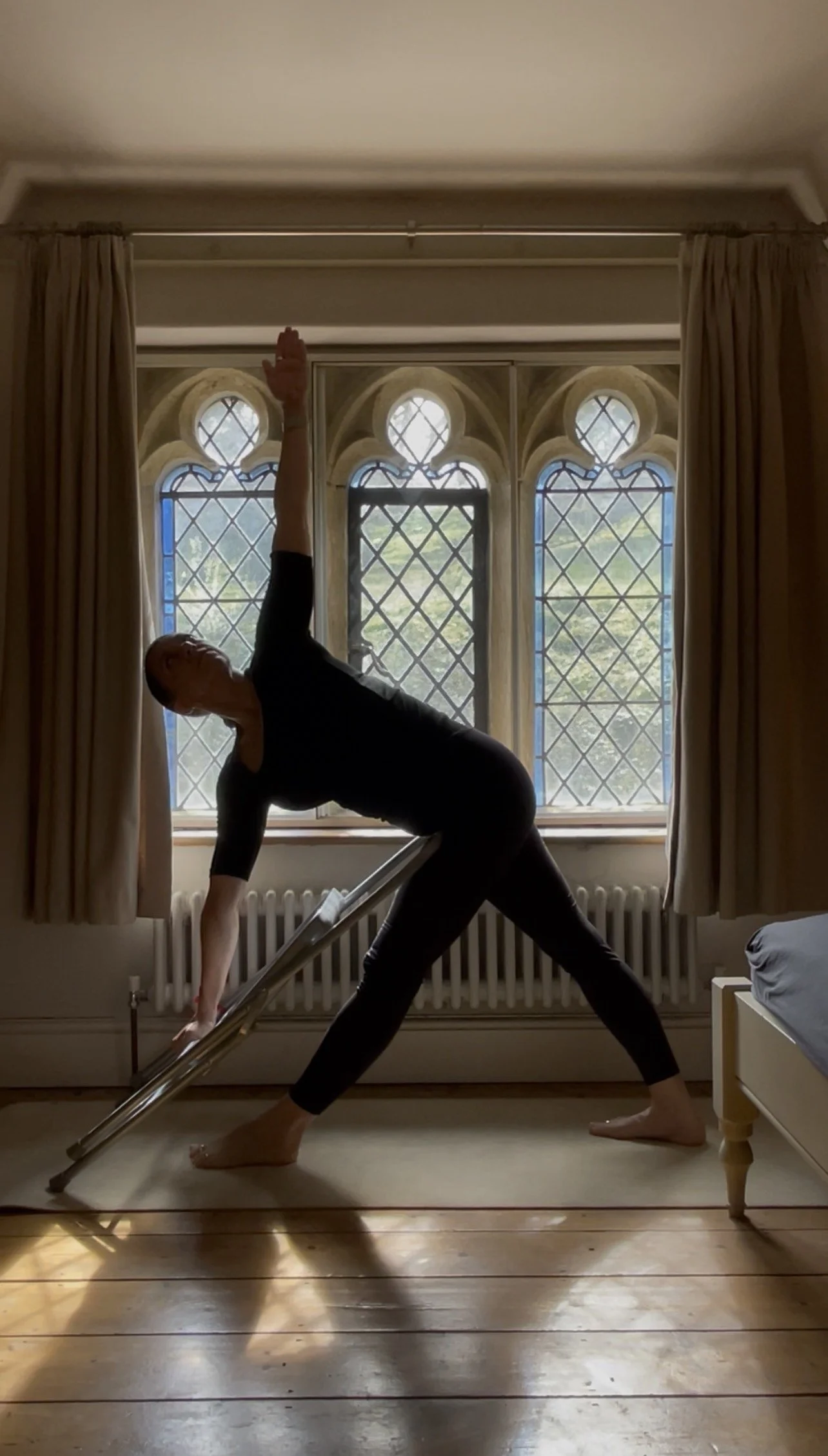
Abhyāsa and Vairāgya: Practice and Letting go
This week in class we’ve been exploring a simple but powerful sutra from Patañjali.
Chapter 1, Sutra 12: Abhyāsa vairāgyābhyam tannirodhah.
It tells us that the fluctuations of the mind are stilled through two things. Practice, and detachment. Two pillars that hold up the whole of yoga.
Abhyāsa is often translated as practice, but not just practice in the sense of showing up to a class or rolling out a mat. It is the willingness to return. Again and again. To the practice, to awareness, to presence. It is consistency over perfection. It is choosing, each day, to begin where you are.

And the truth is, we are rarely in perfect conditions to practice. The body is tired, or busy, or injured, or distracted. Life moves, things happen, energy shifts. If we wait for the ideal moment, we will be waiting forever.
Abhyāsa asks something different of us. It asks us to turn up anyway. Not forcefully, not harshly, but steadily. To meet ourselves exactly as we are, without needing to fix or improve that moment before we begin.
Vairāgya, the second pillar, is often translated as detachment. But it is not indifference, and it is not withdrawal. It is a softening of our grip. A letting go of how we think things should be.
In practice, this might look like releasing the idea that a class has to feel a certain way to be worthwhile. Letting go of the expectation that the body will always move as it once did. Allowing the practice to be what it is, rather than what we hoped it would be. Because the moment we become attached to a particular outcome, we step slightly out of the practice itself.
There is a paradox here. We are asked to commit fully, and at the same time, to not hold on too tightly. To show up, and to let go.
This extends far beyond the mat. Yoga was never just about the shapes we make with the body. It is about how we meet life. How we respond to change, to discomfort, to uncertainty. Whether we can stay present, even when things are not as we would like them to be.
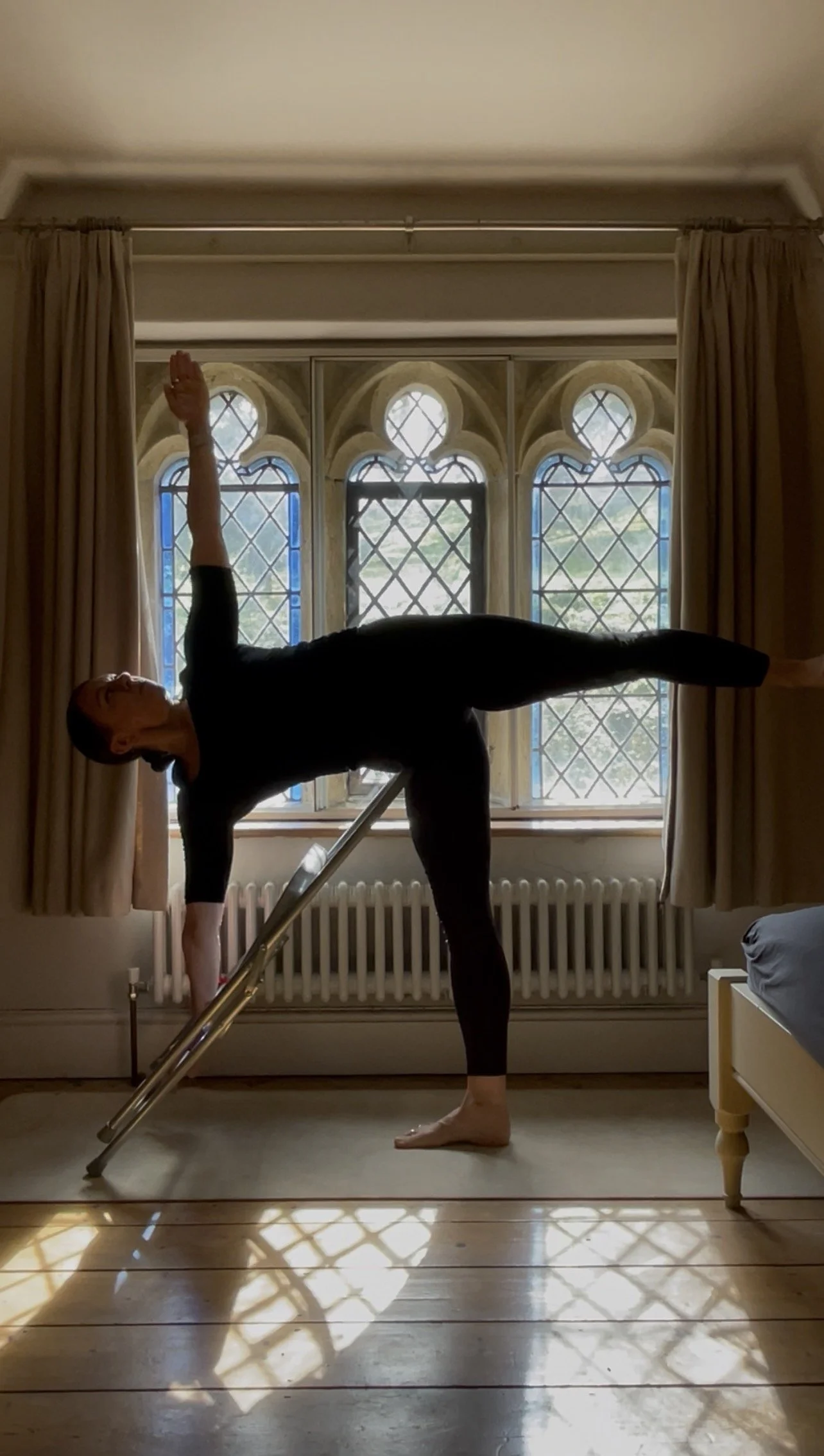
For me, there is also a third quality that feels just as important, even if it is not named here in this sûtra. That is Shraddha, often translated as trust or faith. Trust in the process. Not blind belief, but a willingness to stay with the practice long enough to experience its depth. To trust that even when it feels subtle, or slow, or unclear, something is unfolding.
Sometimes when we step away from practice, it is not always about time or circumstance. Sometimes it is that trust has wavered. We are not quite sure what it is all for, or whether it is working - that’s human. Shraddha invites us to stay, to keep listening, to allow understanding to deepen over time, rather than expecting immediate clarity.
Later, in the second chapter, Patanjali evolves the idea of practice into something richer. He speaks of it as a devoted, sustained effort - anusthāna. Not just repetition, but a kind of offering.
For me, that is what all of this is pointing towards. Not a perfect practice, but a living one.
One where we return, we release, and we trust.