

Feet - a sensitive subject…
Feet can be a surprisingly sensitive subject. For some, there is self-consciousness about how they look. For others, there is a deep discomfort around having their feet seen or touched at all. These feelings are more common than you might think, and they are completely human. Our feet are often hidden away, rarely given attention unless something is wrong, so it is natural that they can feel a little exposed when suddenly brought into the light.
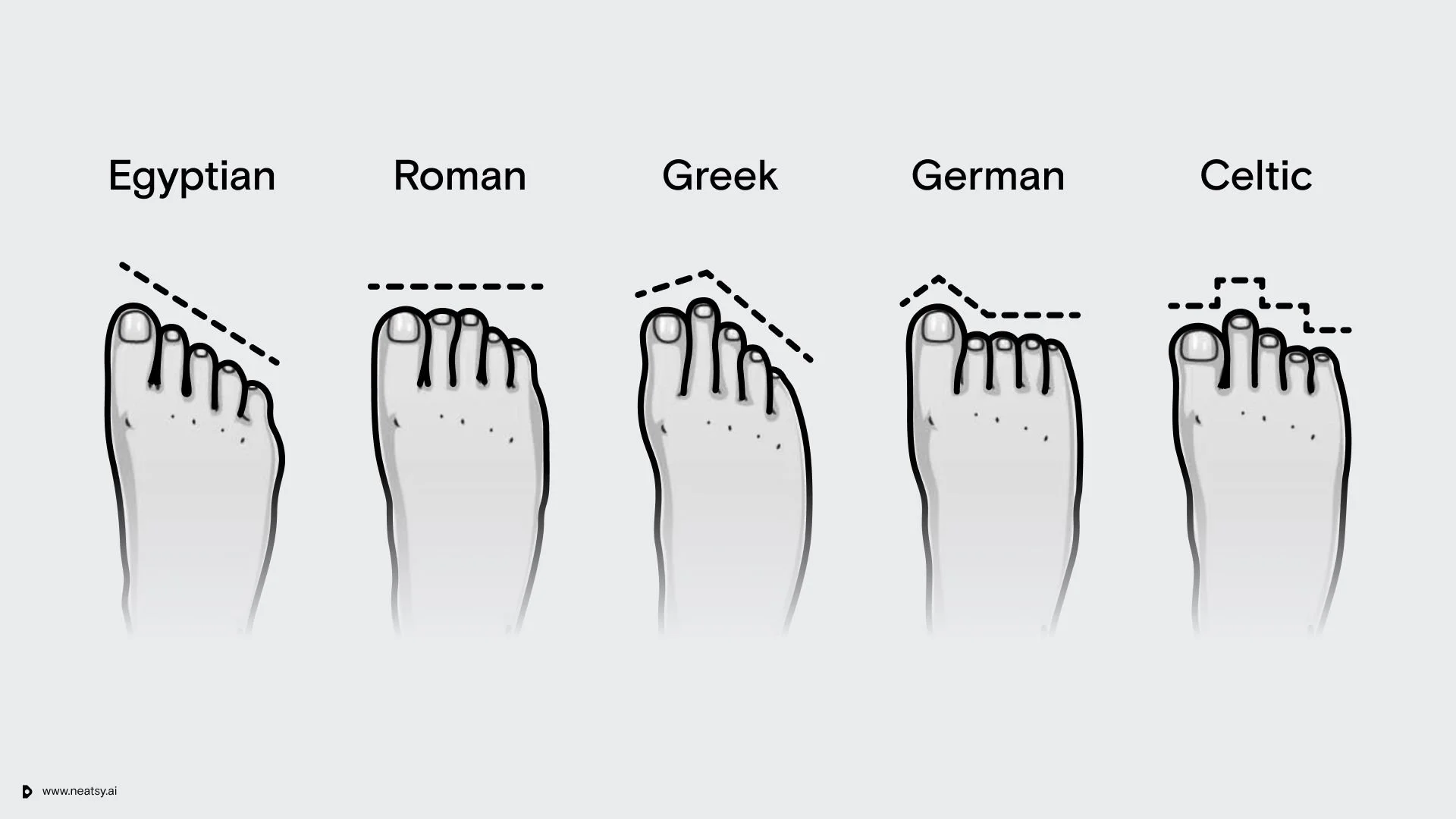
Feet can give us clues about our heritage
Not everyone is willing to work in bare feet, there is often a reluctance to remove our socks at the beginning of class. I understand it. Village halls are not always warm, especially through the winter months. Comfort matters. But when it comes to yoga, there is something essential we lose when we keep that thin layer between our feet and the ground.
The soles of the feet are incredibly sensitive. They are rich with nerve endings, constantly gathering information and sending it back to the brain. Balance, orientation, subtle shifts in weight, all of this begins at the feet. When we cover them we dull that conversation.
It is a little like trying to feel the softness of velvet while wearing gloves. The texture is there, but the experience is muted. Our feet work in much the same way. They are designed to feel, to respond, to guide us.
There is also a practical side. Socks may feel cosy, but they do not improve grip. In fact, they often make things more slippery. When the feet cannot properly connect with the mat or floor, balance becomes less stable, and the body compensates in ways that can create tension elsewhere.
Of course, there are exceptions. Conditions such as Raynaud's syndrome can make bare feet genuinely uncomfortable or even painful. In those cases, care and warmth come first. Yoga is never about forcing. But whenever possible, letting the feet breathe and connect can transform your practice.
There is a growing interest in barefoot movement more broadly. The popularity of barefoot shoes reflects a wider understanding that our feet are not meant to be restricted or numbed. They are intelligent, responsive, and deeply connected to how we move through the world.
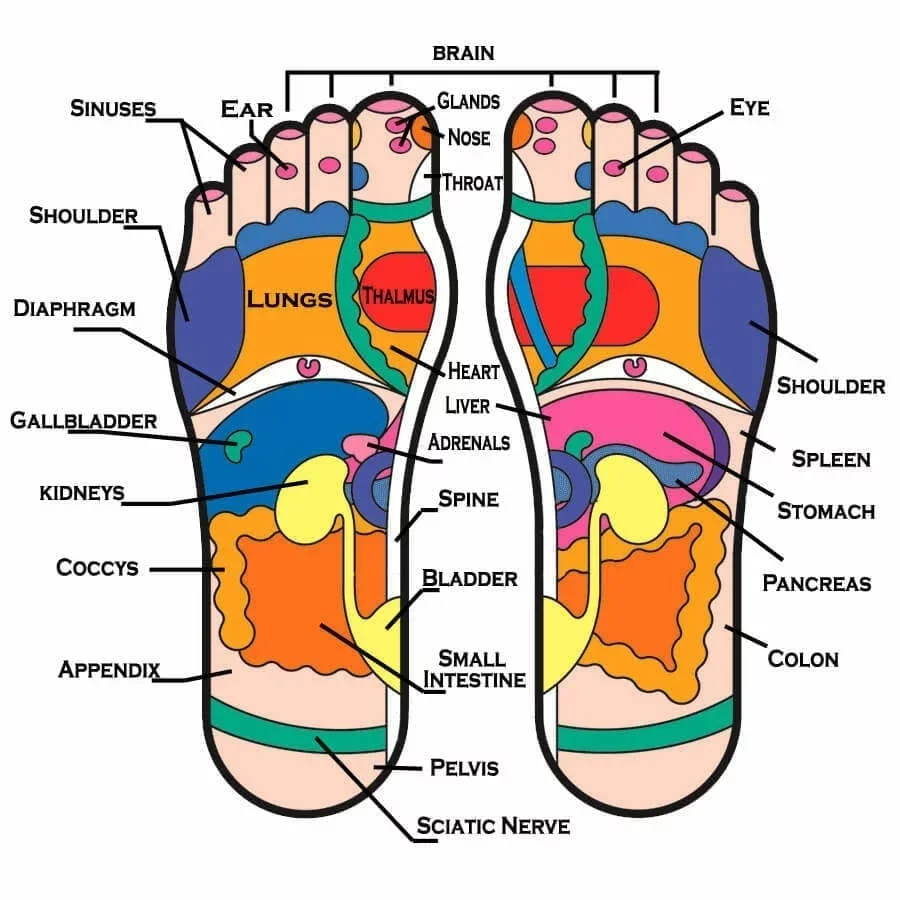
This idea is echoed in reflexology, where different areas of the feet are believed to correspond to different parts of the body. Whether you take this literally or not, it points to something intuitive. The feet are not just passive structures. They are active participants in our wellbeing.
In yoga this awareness has long been recognised. BKS Iyengar spoke about the importance of awakening the feet with great clarity in Light on Yoga. He wrote that we must “plough the cells of the feet like a farmer ploughs his field.” It is a vivid image. The feet are not something we stand on unconsciously. They are something we cultivate, awaken, and bring to life.
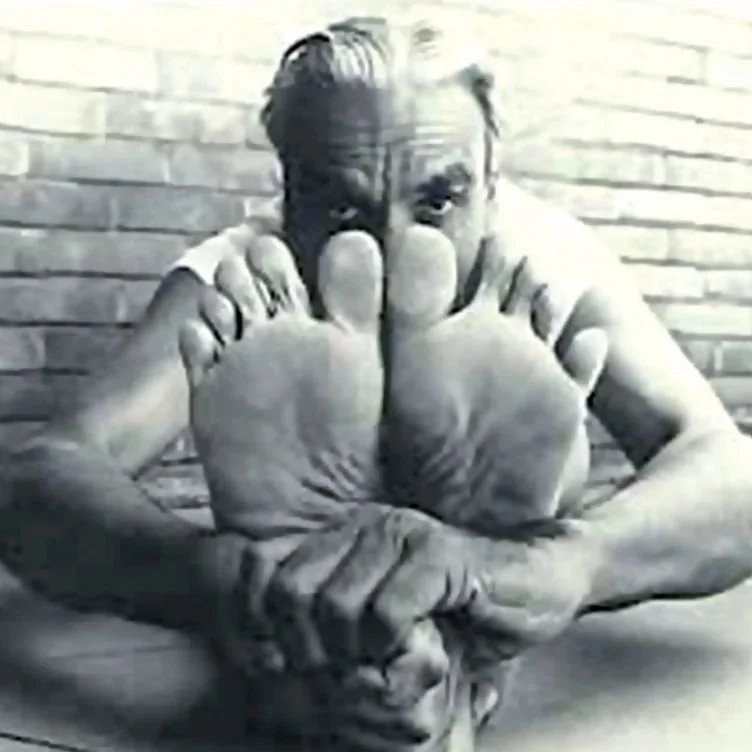
The feet of BKS Iyengar himself
When we stand in our poses, the feet are our foundation. Through them, we root down and through that rooting, something else begins to rise.
In yogic philosophy, there is the idea that we draw prāna, life force energy, up through the body. The soles of the feet become a gateway. When they are awake, receptive, and connected, that flow feels more accessible. Standing poses are no longer just shapes. They become a relationship with the ground beneath us.
There is also something powerful about the simplicity of it. In a modern indoor space, with mats and walls and ceilings, the feet are still our closest connection to the earth. To take off the socks is, in a small way, to return to that connection. To remember it.
And if you ever have the chance to practise outside, feet directly on the grass or soil, you may notice how natural it feels. As though something in the body recognises it immediately.
So next time you step onto the mat, notice what happens when you remove that layer. Notice how the feet respond. Notice how the body listens differently.
It may seem like a small thing. But in yoga, it is often the smallest things that open the deepest doorways.