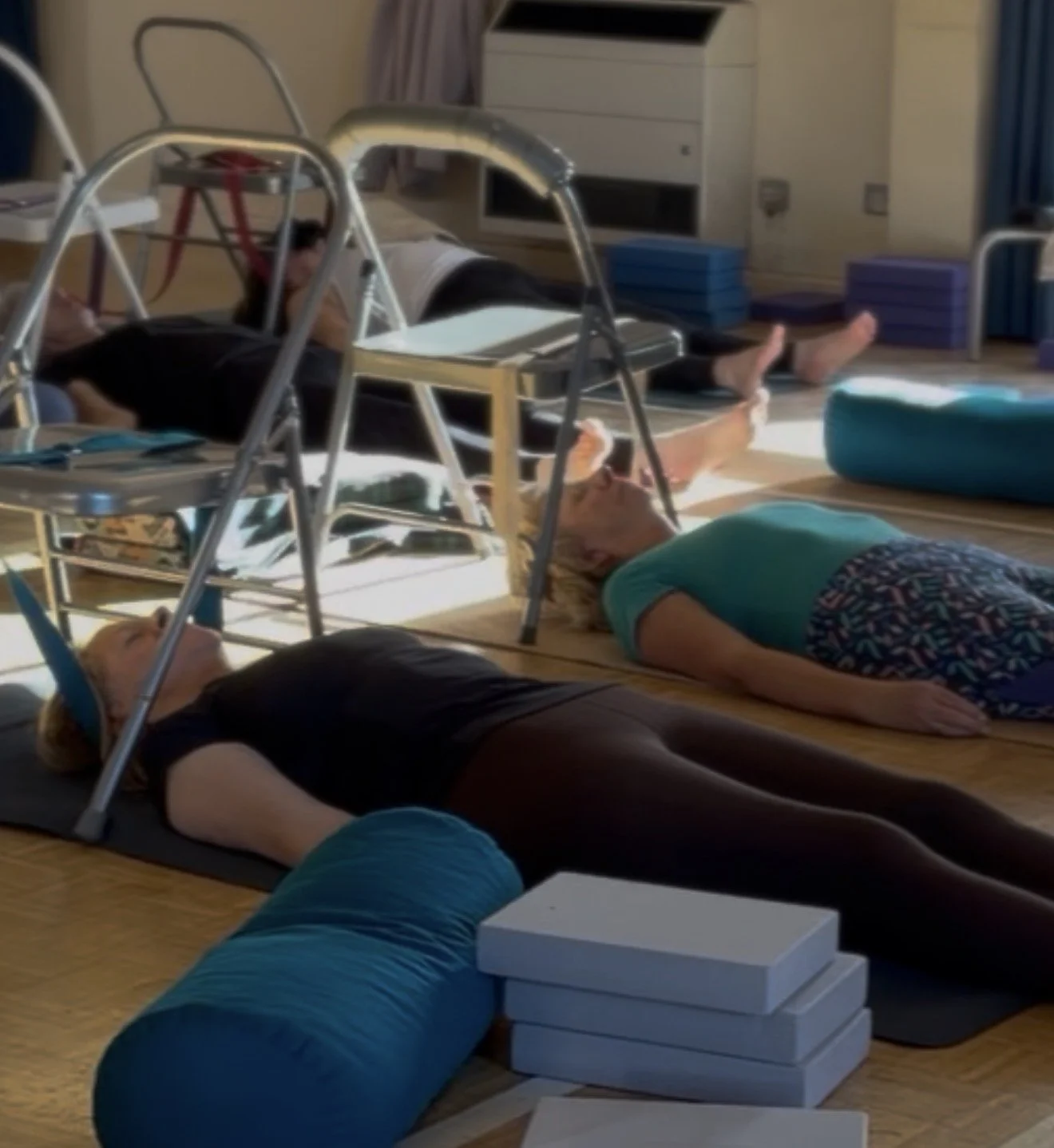
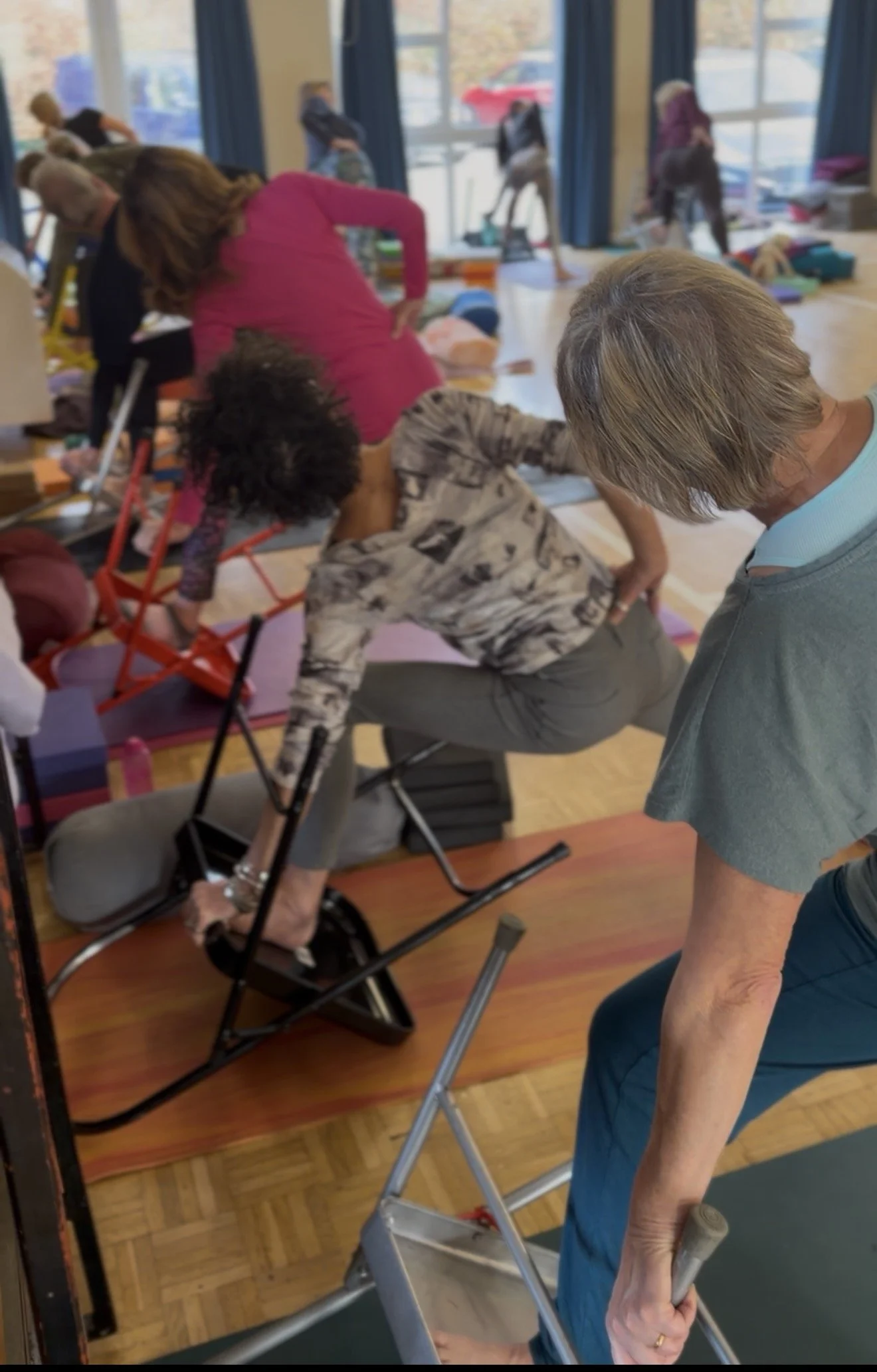
Todday I taught an Iyengar yoga workshop where we spent much of the morning working with chairs. We explored standing poses, twists, backbends and recuperative poses, all with the help of something most people probably wouldn’t associate with a challenging yoga practice……and that was really the point.
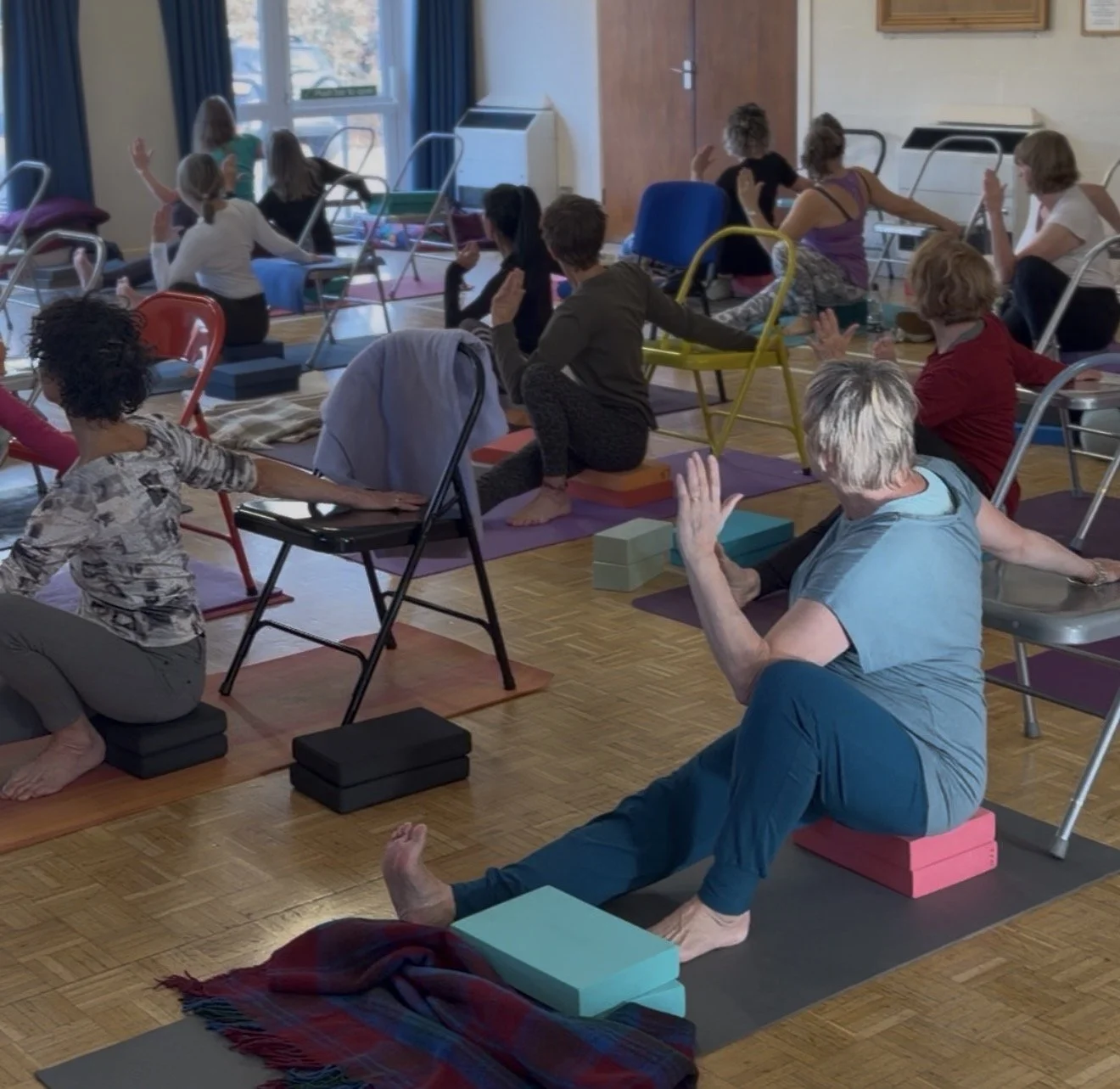
When people hear the words ‘chair yoga’, they often imagine a gentler form of yoga, perhaps something designed for people who are less mobile or unable to practise on the floor. Of course, chairs can be enormously helpful in those circumstances. However, in Iyengar Yoga, the chair has a much wider purpose. It can help us work more deeply, more intelligently and sometimes much more intensely than we might otherwise be able to.
What I particularly wanted to explore during the workshop was something that goes beyond the physical practice.
Sthira Sukham Asanam
In the Yoga Sûtras of Patañjali, there is remarkably little said about the physical postures that have become so closely associated with yoga today. In fact Patañjali gives us just a few sûtras on the subject, and one of the most important is Chapter II, Sutra 46:
Sthira Sukham Asanam
Asana should be steady and comfortable. It’s such a simple statement, but there is an enormous amount contained within those three words.
Sthira means steadiness, stability, firmness.
Sukha means ease, comfort, a sense of spaciousness.
Asanam refers to the posture.
At first glance, these qualities might seem almost contradictory. How can we be firm and stable while also experiencing ease? Surely if we’re working hard in a posture, there must be effort involved? Well yes, of course there is…. but there’s a difference between intelligent effort and unnecessary tension. That’s something we can spend a lifetime exploring in our practice.
The Difference Between Support and Dependence
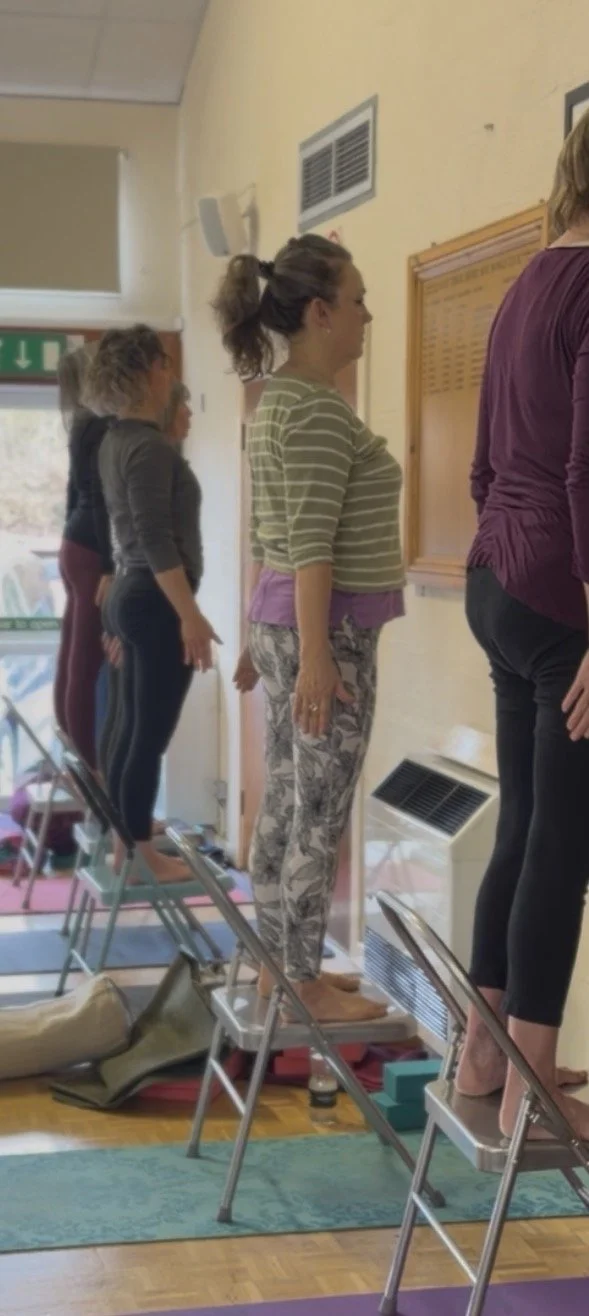
One of the things I wanted everyone to experience was how the support of a chair can actually give us greater freedom. If we’re struggling to maintain our balance, or using enormous amounts of effort simply to hold ourselves in a posture, how much attention do we really have left to observe what’s happening? Often we’re so occupied with trying not to fall over, or trying to stay in the pose, that we lose the opportunity to explore it properly. But introduce a chair, and suddenly something changes.
The body has support……. we can begin to release some of that unnecessary effort…… and with that comes the opportunity to observe, to refine our alignment, to extend further and perhaps discover something in a familiar posture that we hadn’t noticed before. The chair isn’t necessarily making the pose easier. In some cases it allows us to work much harder! It changes where the effort is directed. Rather than using all our energy simply to maintain the shape of the posture, we can begin to understand what we’re actually doing within it….. that’s an important distinction.
The aim isn’t to become dependent on the support. It’s to use that support to develop a greater understanding of ourselves.
Stability in the Body, Stability in the Mind
Something else I wanted to bring into our practice was the relationship between physical stability and our emotional state. We all know what it’s like when life becomes unsettled. When there are things happening around us that we can’t control, our minds can become restless, our thoughts scattered and our emotions difficult to manage. Very often, that unsettled state is reflected in the body. We hold tension without even realising it. Our breathing changes. We lose that sense of being grounded. One of the wonderful things about āsana practice is that we can begin to work in the opposite direction. By establishing stability in the body, we create the conditions for greater stability in the mind. When the feet are firm, the legs active, the spine extended and the breath allowed to move freely, something begins to change…….our attention becomes more focused. We’re no longer quite so caught up in everything going on around us, or indeed everything going on inside our heads. This is where Patanjali’s words become particularly meaningful.
Sthira isn’t simply about being physically strong. And sukha isn’t about collapsing into comfort. It’s about finding a balance between the two. Being stable without becoming rigid. Being at ease without losing awareness.
Learning to Let Go of Unnecessary Effort
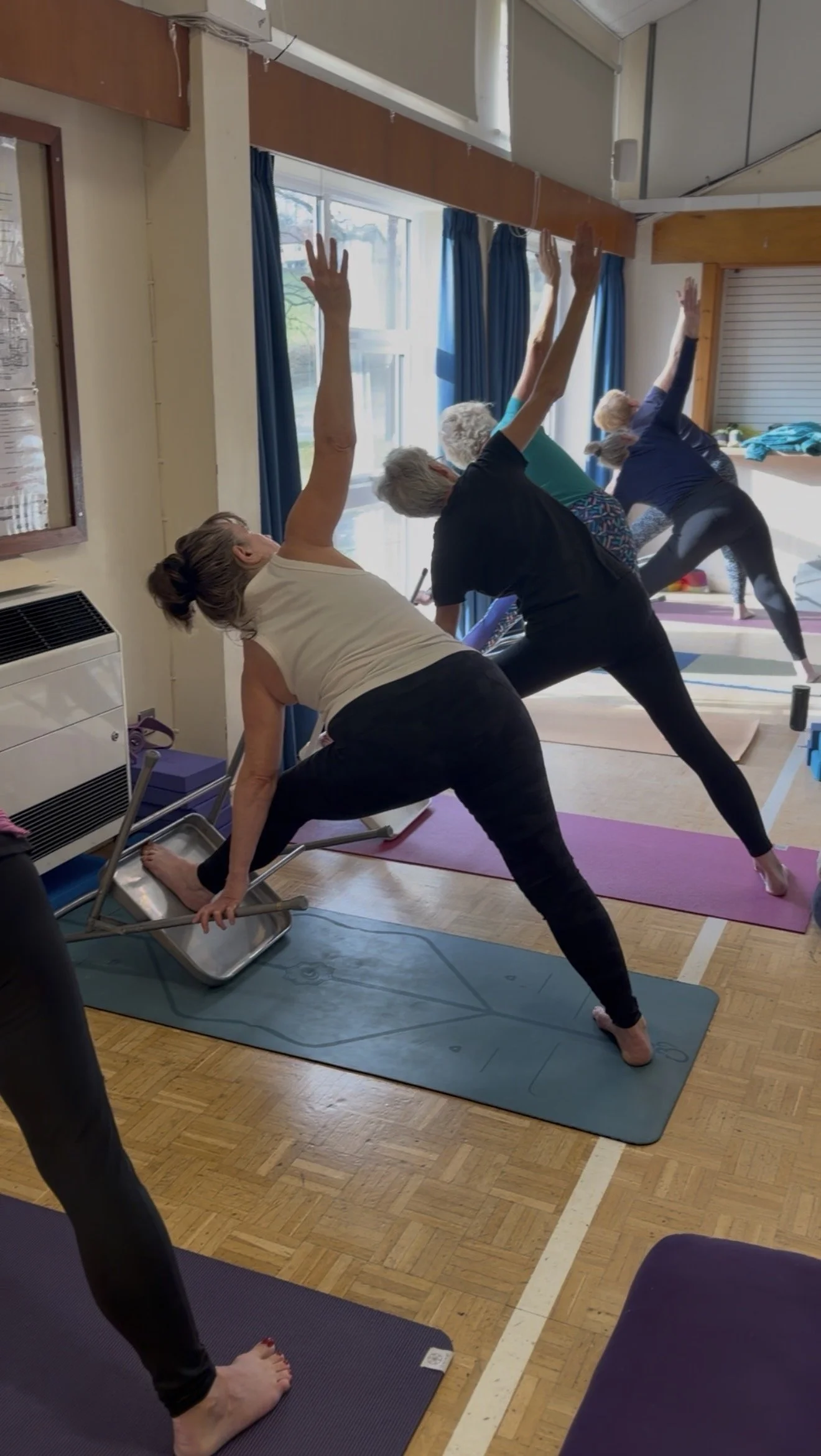
I think one of the hardest things for many of us to learn in yoga is that more effort doesn’t necessarily mean better practice, especially when we become a little more experienced. We’re so accustomed to the idea that if we want to achieve something, we need to work harder, push further or do more. Yoga teaches us something rather different. Of course we need effort, discipline, attention and a willingness to work…….but we also need to recognise when that effort becomes excessive.
When we’re gripping unnecessarily, holding our breath or forcing ourselves into a position, we may be creating exactly the sort of disturbance that yoga is intended to help us overcome. The use of props can be particularly revealing here. With the support of a chair, we can sometimes remain in a posture for longer, giving ourselves time to move beyond the initial physical adjustments and begin to observe the more subtle effects. We can notice where we’re holding tension that serves no useful purpose. We can begin to distinguish between the parts of the body that need to remain active and those that can soften. Gradually, with practice, we begin to understand that stability and ease aren’t opposing qualities at all. They support one another.
Taking the Practice Beyond the Mat
Of course, what interests me most about all of this is how it relates to life beyond our yoga practice. We don’t only need sthira and sukha when we’re standing in Trikonāsana or working over a chair in a backbend. We need them when life becomes difficult.
We need the stability to remain grounded when circumstances around us are changing, sometimes in ways we would never have chosen……but we also need the ability to soften, to adapt and to recognise when holding on too tightly is creating more suffering. Perhaps that’s where the deeper teaching lies. Stability doesn’t mean that nothing can disturb us. Ease doesn’t mean that life will always be comfortable. It’s about developing the capacity to remain present through both. To find strength without becoming hardened by our experiences. To allow ourselves to be supported when we need it, without feeling that somehow makes us weaker. To understand that sometimes, by letting go of unnecessary effort, we actually become stronger.
From Doing to Being
Towards the end of the workshop, we moved into the more recuperative postures. After all the work of establishing alignment, developing strength, exploring extension and learning to use the chair intelligently, there comes a point where we can begin to do less.
The body has been prepared, the nervous system has had the opportunity to settle. Then rather than continuing to make adjustments, we can begin to allow the effects of the practice to unfold. This doesn’t mean that awareness disappears - quite the opposite. We move from actively doing to simply observing. The body can become increasingly passive while the mind remains alert.
Perhaps…… for a few moments…….. we experience something of that balance Patañjali describes.
Steadiness without rigidity…….Ease without dullness.
A sense of being completely supported, yet entirely free.
Sthira Sukham Āsanam.
Three words that describe so much more than how we arrange our bodies in a yoga posture and perhaps a reminder that sometimes the greatest freedom comes not from doing more, but from understanding what we can let go of.